Discreet Billing & AI Companions: How to Keep Your Subscriptions Private

As the world of virtual companions expands, more creators are looking for personalized, immersive digital relationships. While platforms work hard to secure your user profile, a different privacy concern often worries users: the financial paper trail.
Whether you share a bank account with someone, file taxes together, or just want to keep your personal life separate from your work life, understanding how AI girlfriend discreet billing frameworks operate is important.
Here’s your guide to keeping your digital companion subscriptions private.
- Look for Vague Merchant Descriptors
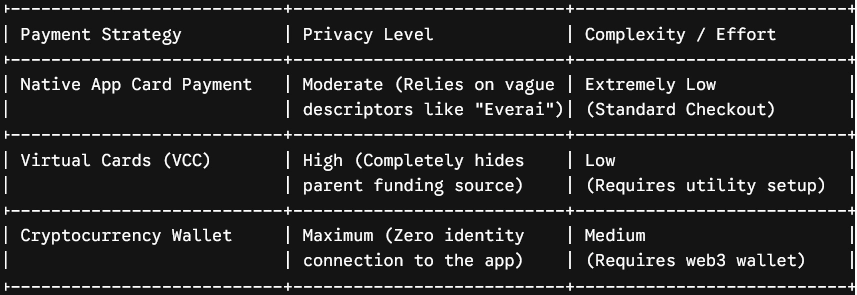
If you pay with a credit or debit card, your main protection is the platform’s “billing descriptor.” This is the official text that shows up on your Visa, Mastercard, or American Express statement.
Top operators know their users value privacy. Instead of using the app’s name on your monthly bill, they use neutral names.
Real-Market Examples:
- Candy AI: Charges show up on bank statements as “Everai” or “EverAI London” (their registered corporate name), obscuring what the app really is.
- GirlfriendGPT: Transactions appear as “xp ndai.cc,” resembling a generic software utility.
- OurDream AI: Invoices come under the neutral title “OD Digital Services.”
Before you upgrade to a paid tier on any platform, check their “Payments & Billing” FAQ page or user forums to see how the merchant descriptor will appear on your card statement.
2. Use Virtual Credit Cards
If you want complete control over your card statements without relying on a vague descriptor, using virtual credit card (VCC) masking services is the best way to protect your finances.
Services like Privacy.com (in the US) or other digital banking options let you create burner debit cards linked to your main checking account in seconds.
Why VCCs Work Well for AI Subscriptions:
- Custom Merchant Names: Some services let you change the merchant descriptor to read as “Groceries” or “Cloud Software” on your bank statement.
- Spend Limits: You can set a virtual card to a single merchant and limit spending (e.g., $15/month). This prevents the app from accidentally double-charging you or renewing if you forget to cancel.
- Instant Burn: When you want to end a subscription, you can delete the virtual card with one tap, cutting off the financial connection.
3. Opt for Cryptocurrency Payments
For maximum privacy, traditional banking carries risk. If you want no link between your identity and your virtual companion app, find platforms that accept web3 assets.
Several leading roleplay networks, like Xtease, allow users to pay with major cryptocurrencies like Bitcoin (BTC), Ethereum (ETH), and Litecoin (LTC).
By using a decentralized crypto wallet to buy subscription credits, your name, billing address, and bank details never reach the platform’s payment system. This adds a strong layer of security.
- Avoid Third-Party Mobile App Stores
Downloading a companion app from the Apple App Store or Google Play Store seems easy, but it harms your financial privacy.
When you buy a subscription through an in-app purchase, it appears in your Apple or Google account purchase history. Your bank statement will mention “Apple Bill” or “Google Play,” which can lead curious partners or family members to check what you bought.
The Privacy Fix: Always register, manage, and pay for your subscriptions directly through the companion platform’s official website instead of using mobile apps.
The Conclusion
Keeping your AI girlfriend’s billing discreet is easy if you approach it thoughtfully. If you use a mainstream site like Candy AI, standard card processing under a corporate name like Everai provides good protection. However, if you share accounts or keep close track of logs, taking five minutes to set up a masked virtual card or use cryptocurrency will keep your digital relationship entirely private.